Buying a home often starts long before you attend an open house or make an offer. One of the first questions many Canadian buyers ask is simple: How much home can I actually afford?
That is where mortgage pre-qualification and mortgage pre-approval come in.
Although the terms are sometimes used interchangeably, they are not exactly the same. Both can help you understand your potential borrowing capacity, but a mortgage pre-approval usually involves a more detailed review of your finances.
Understanding the difference can save you time, help you shop with a realistic budget, and put you in a stronger position when you are ready to make an offer.
If you're planning to buy your first home, upgrade to a larger property, or invest in Canadian real estate, here's what you should know.
What Is a Mortgage Pre-Qualification?
A mortgage pre-qualification is an early estimate of how much you may be able to borrow based on the financial information you provide.
Depending on the lender or mortgage professional, you may be asked about:
- Your income
- Your employment
- Your approximate monthly debts
- Your down payment
- Your assets
- Your general financial situation
Based on this information, you receive an estimate of the mortgage amount you may qualify for.
A pre-qualification can be useful when you are at the very beginning of your home-buying journey. It gives you a rough idea of your budget before you start seriously searching for properties.
However, it is important to understand that a pre-qualification is generally not a guaranteed mortgage approval. The lender may need to review supporting documents and complete additional checks before approving your mortgage application.
Example
Imagine you earn $90,000 per year, have limited monthly debt, and plan to make a 10% down payment.
Based on the information you provide, you may be pre-qualified for a mortgage within a certain price range.
That estimate can help you decide whether you should be looking at condos, townhomes, detached homes, or properties in a different location.
But your actual mortgage approval may change once your income, debts, credit, down payment, and the property itself are fully reviewed.
What Is a Mortgage Pre-Approval?
A mortgage pre-approval is generally a more detailed step in the home-buying process.
The lender or mortgage professional reviews more information about your financial situation to estimate how much you may qualify to borrow.
The process may involve reviewing documents such as:
- Proof of employment
- Income information
- Pay stubs
- Tax documents, where applicable
- Information about your debts
- Your down payment
- Your credit history
If you meet the lender's requirements, you may receive a pre-approval that outlines an estimated mortgage amount and other terms.
Some lenders may also provide a rate hold for a specific period. The exact terms and conditions can vary between lenders.
A mortgage pre-approval can give you a clearer picture of your purchasing power, but it is still not the same as final mortgage approval.
Before funding the mortgage, the lender may still need to review the property, confirm your financial information, and complete any remaining underwriting requirements.
Mortgage Pre-Approval vs Pre-Qualification: The Main Differences
| Feature | Mortgage Pre-Qualification | Mortgage Pre-Approval |
|---|---|---|
| Financial review | Basic or preliminary | More detailed |
| Documentation | May be limited | Usually more documentation |
| Credit review | May vary | Often more comprehensive |
| Budget estimate | General estimate | More specific estimate |
| Useful for | Early planning | Serious home searching |
| Mortgage guarantee | No | No, final approval is still required |
The exact process can vary by lender, so always ask what has actually been reviewed before relying on the amount provided.
Which One Should You Get First?
If you are only starting to think about buying a home, a mortgage pre-qualification can be a helpful first step.
For example, you may be asking:
- Could I afford to buy a home this year?
- How much should I save for a down payment?
- Should I look at a condo or a townhouse?
- Is my current income enough to qualify?
- Should I pay down debt before buying?
A pre-qualification can help answer these early questions.
However, once you are actively looking at homes and may be ready to make an offer, a mortgage pre-approval is usually more useful.
It provides a more detailed understanding of your financial position and helps you search for properties within a realistic budget.
Why a Mortgage Pre-Approval Is Important Before House Hunting
One of the biggest mistakes buyers make is falling in love with a property before understanding whether it fits their financial situation.
You may walk into a beautiful home, picture your furniture in the living room, imagine your family using the backyard, and start planning your move.
Then you discover that the property is outside your realistic price range.
Getting a mortgage pre-approval before seriously house hunting can help prevent this situation.
1. You Know Your Approximate Budget
A pre-approval gives you a clearer idea of your potential borrowing capacity.
However, just because a lender indicates that you may qualify for a certain amount does not mean you need to spend the maximum amount.
You should also consider:
- Property taxes
- Condo fees
- Utilities
- Home insurance
- Maintenance costs
- Potential repairs
- Moving expenses
Your comfortable budget may be lower than your maximum approved amount.
2. You Can Focus Your Property Search
Once you have a realistic price range, your home search becomes more efficient.
Instead of spending weekends viewing homes you may not be able to afford, you can focus on properties that fit your budget and needs.
For example, your search may include:
- Condos
- Townhomes
- Detached homes
- New construction properties
- Investment properties
Your real estate professional can also help you compare neighbourhoods and property types within your price range.
3. You May Be Better Prepared to Make an Offer
In competitive markets, preparation matters.
When you find the right property, you may need to move quickly.
Having already completed the pre-approval process means you have a better understanding of your financing position before entering the offer process.
That does not replace the lender's final approval, but it can help you approach the purchase with greater confidence.
What Factors Affect Your Mortgage Pre-Approval?
Mortgage lenders look at several parts of your financial situation.
Your Income
Your income helps determine your ability to make regular mortgage payments.
The lender may consider:
- Employment income
- Self-employment income
- Commission income
- Other eligible income sources
The documentation required may differ depending on how you earn your income.
Your Down Payment
Your down payment directly affects how much you need to borrow.
In Canada, minimum down payment requirements can depend on the home's purchase price and other applicable mortgage rules.
A larger down payment may reduce the amount you need to finance, although buyers should also consider keeping enough savings available for closing costs and unexpected expenses.
Your Debt
Existing debt can affect your borrowing capacity.
Examples include:
- Car loans
- Credit card balances
- Lines of credit
- Student loans
- Other mortgage obligations
Reducing unnecessary debt before applying for a mortgage may improve your overall financial position.
Your Credit History
Lenders generally review your credit profile as part of the mortgage application process.
A stronger credit history can make it easier to access mortgage options, although approval decisions depend on several factors.
Before applying, review your credit report and check for errors or outdated information.
The Property You Want to Buy
The property itself can also matter.
Before final approval, the lender may review factors related to the home, including its value and suitability as security for the mortgage.
This is one reason a mortgage pre-approval should not be viewed as final approval.
Does Mortgage Pre-Approval Affect Your Credit Score?
The impact depends on how the lender or mortgage professional checks your credit.
A full credit inquiry may affect your credit score temporarily, while other types of preliminary checks may have a different impact.
Before applying, ask:
Will this involve a hard credit inquiry?
It is also a good idea to avoid applying for multiple forms of new credit while preparing to purchase a home unless necessary.
Keeping your financial situation stable can make the mortgage approval process smoother.
How Long Does a Mortgage Pre-Approval Last in Canada?
The length of a mortgage pre-approval or rate hold depends on the lender and the mortgage product.
Some lenders may offer rate holds for a specific number of days, but the exact period and conditions vary.
Before relying on a pre-approval, confirm:
- How long it remains valid
- Whether your interest rate is held
- What conditions apply
- Whether your income and credit will need to be reviewed again
- What could affect your final approval
If your financial situation changes significantly before you buy a home, you may need to update your mortgage application.
What Should You Avoid After Getting Pre-Approved?
Once you receive a mortgage pre-approval, try to keep your financial situation stable until closing.
Avoid making major financial changes without first considering how they could affect your mortgage application.
This may include:
- Taking out a new car loan
- Applying for several new credit cards
- Making large purchases on credit
- Increasing existing debt
- Changing jobs without understanding the impact on your application
- Missing payments
Lenders may review your financial situation again before finalizing the mortgage.
Common Mistakes First-Time Buyers Make
Assuming Pre-Approval Means Guaranteed Financing
A pre-approval is an important step, but it does not guarantee that your mortgage will receive final approval.
Your lender may still need to verify documents, review the property, and complete the final approval process.
Buying at the Maximum Amount
Your maximum mortgage amount and your comfortable monthly budget may not be the same.
Leave room for regular homeownership expenses and unexpected costs.
Forgetting About Closing Costs
Your down payment is not the only amount you need to save.
Depending on your situation, closing costs may include expenses such as:
- Legal fees
- Land transfer taxes
- Home inspection fees
- Title insurance
- Property insurance
- Moving costs
- Adjustments for property taxes or utilities
Understanding these costs before making an offer can prevent financial stress later.
Making Major Financial Changes
A new loan or significant increase in debt could affect your financial profile.
If you are close to purchasing a home, stability is often your friend.
A Simple Example: How the Process Can Work
Let's say you are planning to buy your first home.
You start with a mortgage pre-qualification to understand your approximate budget. Based on your income, debts, and savings, you get a general idea of the price range you may be able to consider.
A few months later, you have saved more for your down payment and are ready to actively search for a home.
You then move forward with a mortgage pre-approval. Your financial information is reviewed in greater detail, giving you a clearer picture of your potential borrowing capacity.
You begin viewing properties within your budget and eventually find the right home.
Before the purchase is completed, your lender reviews the property and completes the remaining requirements for final mortgage approval.
This approach can help make the buying process more organized and reduce surprises along the way.
Mortgage Pre-Approval Checklist for Canadian Buyers
Before applying, gather the information you may need.
Your checklist may include:
Personal Information
- Government-issued identification
- Current address
- Employment information
Income Documents
- Recent pay stubs
- Employment confirmation
- Tax documents, if required
- Proof of additional income, where applicable
Financial Information
- Bank statements
- Down payment information
- Investment or savings details, where relevant
Debt Information
- Car loans
- Credit cards
- Lines of credit
- Student loans
- Other financial obligations
Requirements can vary depending on your employment situation and lender.
Should You Get Pre-Qualified or Pre-Approved?
For buyers who are still exploring the possibility of homeownership, a mortgage pre-qualification can be a useful starting point.
For buyers who are ready to actively search, a mortgage pre-approval is generally the more practical next step.
The best approach often looks like this:
Thinking about buying → Pre-Qualification
Ready to start house hunting → Pre-Approval
Found a property → Mortgage application and final lender approval
Final Thoughts
Understanding the difference between mortgage pre-qualification and mortgage pre-approval can make the home-buying process much easier.
A pre-qualification can help you explore your options and get an early estimate of what may be possible. A pre-approval usually involves a more detailed financial review and can give you a clearer starting point when you are seriously searching for a home.
The most important thing to remember is that neither should be confused with final mortgage approval.
Before making an offer, understand your complete budget, including your down payment, mortgage payments, property taxes, closing costs, insurance, and future home maintenance.
At The Homess, we help buyers navigate the home-buying journey with a clearer understanding of their options. From finding properties that match your budget to guiding you through the offer and inspection process, having the right support can make a major purchase feel far more manageable.
If you're ready to start looking for your next home in Canada, begin with a realistic budget—and then focus on finding a property that truly works for your lifestyle and long-term goals.
Frequently Asked Questions
Is mortgage pre-approval better than pre-qualification?
A mortgage pre-approval generally involves a more detailed review of your finances, making it more useful when you are seriously preparing to buy a home. A pre-qualification is often better suited to early planning.
Does a pre-approval guarantee a mortgage?
No. Final approval can still depend on verifying your financial information, reviewing the property, and meeting all of the lender's remaining requirements.
Should I get pre-approved before looking at houses?
If you are seriously planning to buy, getting pre-approved before actively house hunting can help you understand your approximate budget and focus on suitable properties.
How much does mortgage pre-approval cost in Canada?
The cost and process can vary depending on the lender or mortgage professional. Ask about any fees and whether a credit inquiry will be completed before proceeding.
Can I make an offer without mortgage pre-approval?
It may be possible, but entering the buying process without understanding your financing position can create unnecessary uncertainty. Being prepared before making an offer can help you make more informed decisions.
Related posts:
Buying a home in Canada? Use this complete home inspection checklist to identify costly issues, understand the inspection process, and make a confident purchase.

Learn how Canada's new 2026 HST rebate differs from the old GST/HST rebate program and learn what the changes mean for homebuyers, investors, and pre-construction purchasers.
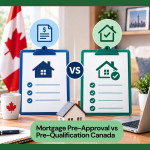 Mortgage Pre-Approval vs Pre-Qualification in Canada: What's the Difference?
  Home Inspection Checklist for Canadian Buyers - What to Look for Before You Buy
  New HST Rebate vs Old GST/HST Rebate: What's Changed for Canadian Homebuyers in 2026?
  How Do You Estimate Rental Property Cash Flow in Canada?
  Foreclosed Property in Canada (2026 Guide): How to Buy & Find the Best Deals